
Oracle Surpasses Revenue with AI: What Explains the Turnaround

 Prefer us on Google


Oracle reported revenue of $19.3 billion in the first fiscal quarter, a 30% jump from the same period last year. The figure exceeded the average estimate of $19.14 billion and brought relief to investors who had been pressuring the stock throughout 2026. Shares, which had accumulated a decline of over 20% for the year, rose nearly 7% in after-market trading.
More relevant than the number itself is what it represents: the first concrete evidence that the billions poured by the company into artificial intelligence infrastructure are converting into revenue. For those following the technology sector, Oracle's case is an important thermometer for the sustainability of the investment cycle in AI.
The Surprising Order Book
The most significant data from the earnings report was not the quarterly revenue, but the future revenue backlog. Oracle closed the period with $664 billion in contracts, up from $638 billion in the previous quarter. Analysts had expected $639.89 billion. The nearly $25 billion difference in three months shows that large corporations continue to contract cloud infrastructure at an accelerated pace.
A relevant detail: Oracle's CFO, Hilary Maxson, explained that most of the new contracts do not require significant cash outlay for chips from the company. The predominant model was pre-payment or "bring your own hardware," which reduces pressure on the company's cash flow. In other words, Oracle is monetizing its infrastructure without necessarily increasing the pace of capital invested in proportion.
This dynamic matters because one of the main market fears in recent months has been precisely the impact of the big techs' billion-dollar spending on data centers on cash generation. S&P Global even downgraded Oracle's credit rating in July, citing weak cash flow and increased business risk.
Capex of $28.5 Billion and the Return Equation
Investment numbers remain heavy. Oracle reported capital expenditures of $28.5 billion in the quarter, including about $18 billion in net cash outlay. However, this figure fell short of the $19.38 billion expected by analysts, reinforcing the narrative that the company is managing to grow without spending more than anticipated.
During the period, the company brought 850 megawatts of capacity online in data centers. For comparison, large hyperscale data center facilities typically operate in the range of 100 to 300 megawatts. This indicates aggressive expansion, but one that is already generating contracts.
The central question for investors is whether this capex cycle can be sustained without deteriorating the financial structure. The results from the first quarter suggest that it can, at least for now. The conversion of the order book into revenue is accelerating, according to the management itself, and this is expected to intensify throughout the fiscal year.
The Ghost of Stargate and Market Skepticism
Not all news is good. The Stargate project, one of Oracle's most ambitious bets in AI infrastructure, remains surrounded by uncertainties. Reports of construction delays, licensing issues, skilled labor shortages, and power supply limitations have fueled investor skepticism.
This skepticism largely explains why Oracle's shares had been in such sharp decline even with the AI sector in full expansion. The market was pricing in execution risk, not demand. The first-quarter earnings report helps reduce some of that discount, but it does not solve the entire equation.
For those investing in technology or following the AI infrastructure sector, it is worth observing how large cloud companies are managing the balance between expansion and profitability. Oracle is in a different position than Amazon, Microsoft, and Google: it is an aggressive entrant in the cloud market, not an incumbent. This means more risk but also more room to grow.
-- Price
High Projections and What to Expect for the Fiscal Year
Oracle raised its adjusted earnings per share forecast for the fiscal year 2027 from $8.05 to $8.10. It is a modest adjustment but symbolic: it signals that management is confident in the trajectory of converting contracts into revenue. Analysts had expected $8.07.
The company also projects revenue of at least $90 billion for the full fiscal year. For the second quarter, the expectation is for growth between 30% and 34% in revenue, with adjusted earnings between $1.85 and $1.93 per share. Both ranges are in line with market consensus.
What stands out is the consistency of the acceleration. Oracle is not just growing; it is maintaining the pace quarter after quarter. This contrasts with companies that have reported strong results in AI but have not managed to sustain the trajectory.
Why This Matters Beyond Oracle
Oracle's earnings report serves as a leading indicator for the entire AI infrastructure ecosystem. If a company that was under market pressure can deliver revenue above expectations and raise projections, it suggests that corporate demand for artificial intelligence services remains robust.
For Brazilian investors, this case illustrates an important dynamic: the difference between narrative and execution in the AI sector. Many companies rode the wave of euphoria in 2024 and 2025. Now, in 2026, the market is separating those who truly convert investment into revenue from those who merely burned capital. Oracle, at least in this quarter, fell into the first group.
This content is provided for general informational purposes only and doesn't constitute financial, investment, legal, or tax advice. Any events, rewards, online promotions, or related information mentioned herein should not be considered a recommendation, solicitation, or invitation to purchase, sell, trade, or otherwise deal in any crypto assets. Crypto assets are highly volatile and may result in loss. The availability of WEEX services, products, and related events may vary by region. You are responsible for ensuring that your participation is in accordance with applicable local laws and regulations.
You may also like

Visa’s $2.5 billion crypto credit bet puts card settlement financing onchain

Circle to Withdraw USDC Support on Noble and Shut Down CCTP V1

Oil Above $100: What Changes for Petrobras and the Ibovespa

$1 Billion in Stablecoins Enter Binance, but $16 Billion in Liquidity Exits

Brent Price Forecasts Soar to $90, HSBC Warns: Risk of $120

BCRA expects a $4.4 billion offer from companies and provinces to support dollar purchases

The Journey to Agentic Payment: The Real Challenge Lies in the Middle Path

Reya Transitions from Automated Market Maker to Order Book, Changes 12 Markets to Reduce-Only Mode
Porsche Sells Stake in Bugatti for 1 Billion Euros

Meta Stock Jumps 6.7% After Launching Muse: Its First Personal AI Agent
AAPL Stock Price Prediction: What Wall Street Expects After the Foldable Launch

Difference Between Market Order and Limit Order on Indodax, Which is Better? - Fintech World
Bank of Communications Launches Cross-Border Trade Service Based on Digital Currency Infrastructure
BCA Macro Outlook: How Much Longer Can U.S. Stocks Rise? The AI Investment Cycle May Only Have Completed Two-Thirds

Surge in Oil Prices and Decline in Cryptocurrency Market Value in the Last 24 Hours

Bitwise Raises Possibility of Bitcoin Reaching All-Time High in 2026
Reassessing NEAR's Investment Logic: Has Trading Volume Taken Off, and Can Token Value Keep Up?

Japan’s 3% bond yield challenges U.S. Treasuries

What is hedging? The trading minute

Cypher Asia 2026 Hong Kong Summit Concludes Successfully: 22 Industry Leaders Discuss the New Future of Intelligent Crypto Finance
Bitcoin sell pressure drops to one-month low as long-term holders reduce profit taking

What is Starknet? Reasons for the Supply Cap of 10 Billion in Published Information
'Barotune' Provides AI Interpretation at CMAAO Seoul Conference with Real-Time Subtitles for Technical Terms

Philippine Central Bank to Suspend New Registrations for Payment Service Providers for 12 Months, Considering Enhanced Supervision of VASPs
Liquid Compute CEO Introduces Computing Power Price Hedging Mechanism

Kalshi has filed to launch gold and silver perps
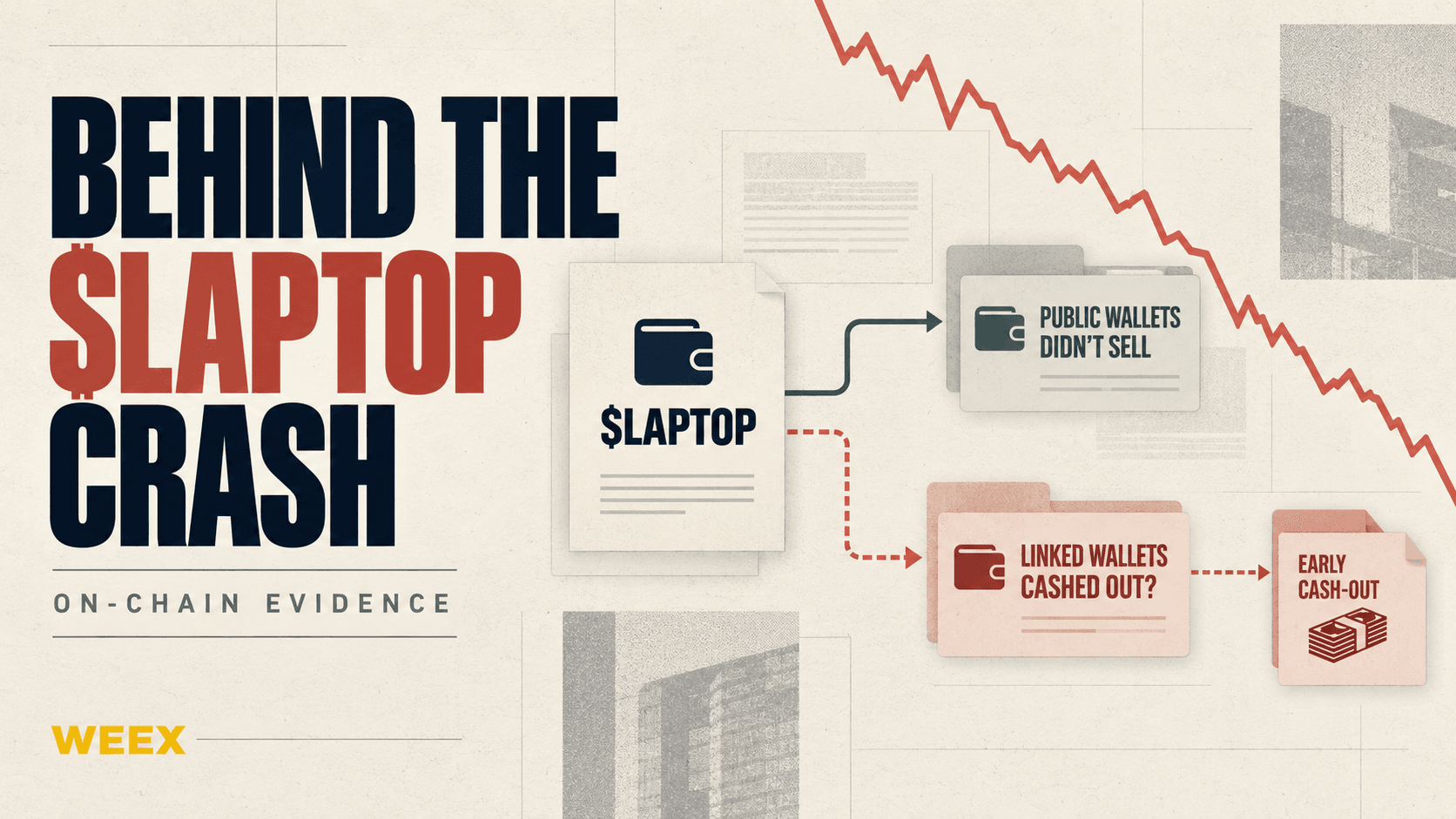
Behind the $LAPTOP Crash: On-Chain Evidence Shows “Public Wallets Did Not Sell, but Linked Wallets Cashed Out Early”
Near $100 Million Loss in a Single Quarter, Cash Reserves Up 52%: Canaan's Struggle for Survival

Kapital Completes $125 Million Financing Round Led by Fasanara Capital
Nearly a fifth of all Bitcoin mining power is sitting completely dark, and turning it back on could trigger a brutal margin trap
Visa’s $2.5 billion crypto credit bet puts card settlement financing onchain
Circle to Withdraw USDC Support on Noble and Shut Down CCTP V1
Oil Above $100: What Changes for Petrobras and the Ibovespa
$1 Billion in Stablecoins Enter Binance, but $16 Billion in Liquidity Exits
Brent Price Forecasts Soar to $90, HSBC Warns: Risk of $120
BCRA expects a $4.4 billion offer from companies and provinces to support dollar purchases


