
U.S. Supreme Court Allows Trump’s Order on Mail-in Voting to Move Forward

 Prefer us on Google


**The U.S. Supreme Court allowed President Donald Trump to proceed with an executive order that restricts mail-in voting, although new appeals could still delay its implementation. With several states about to send out their ballots, the electoral calendar adds pressure to a dispute that once again scrutinizes the administration of elections.
A Ruling with Uncertain Scope
The U.S. Supreme Court paved the way for President Donald Trump to advance his executive order aimed at restricting mail-in voting. However, the decision does not resolve how much his administration will be able to implement before the rapidly approaching midterm elections, which limits the operational margin for modifying electoral procedures. The order from the highest court came through an unsigned decision, according to Associated Press, and faced opposition from the three liberal-leaning justices. The ruling represents a procedural backing for the administration but does not necessarily close the dispute, as there is still room for new challenges in lower courts or higher instances.
The Department of Justice had filed an emergency appeal requesting that the Supreme Court allow the changes to be implemented before the elections. That request aimed to prevent litigation from blocking the order during a stage when states and election authorities are already preparing to distribute materials to voters. The practical scope will now depend on how quickly the administration moves forward and the decisions made by other courts. The resolution allows the process to continue, but does not guarantee that all modifications can take effect in time or survive future judicial challenges.
The Electoral Calendar Pressures the Administration
Time is one of the main obstacles to implementing significant changes to mail-in voting. The U.S. Postal Service explained last week how it would implement the order, but some states will begin sending ballots to voters in just a few weeks, reducing the possibility of uniformly redesigning procedures. The distribution of ballots typically requires coordination among state authorities, local election offices, and the postal system. Therefore, any changes affecting the receipt, processing, or delivery of mail-in votes may require specific instructions, technical adjustments, and direct communication with voters, even if the federal order receives judicial authorization.
The news does not specify which concrete provisions could be applied first or which states would face immediate effects. This lack of precision keeps a central question open: whether the administration will be able to transform the ruling into operational changes before local authorities have begun their own electoral timelines. The possibility of delays also increases uncertainty for voters who rely on the mail. As courts review the arguments from the parties, states must continue organizing their elections under a scenario where the rules could be modified close to the start of voting.
A Long-Standing Political Dispute
Trump has made mail-in voting one of his recurring political targets, claiming that this mechanism leads to fraud. However, the information cited in the news indicates that there is strong evidence to the contrary, in addition to recalling that the president himself has used this method to vote. The controversy combines a debate over electoral procedures with a broader dispute about public trust. Fraud claims, when not backed by solid evidence, can fuel doubts about legitimate results and increase political pressure on officials responsible for administering elections.
Mail-in voting is not a uniform practice across the country, as states apply different rules and deadlines. This diversity explains why a federal order can produce unequal consequences and why litigation often focuses both on government authority and on the specific way each change is implemented. The division among judges also reflects the institutional sensitivity of the case. Although the decision allows the administration to move forward, the disagreement among liberal justices shows that significant disagreements persist regarding the scope of the order and the risks of intervening in electoral rules when elections are approaching.
What May Happen Next
The case could become one of several challenges related to voting that reach the courts. Affected organizations, states, or voters could file new actions if they believe that the implementation of the order exceeds presidential powers or interferes with timelines established by electoral authorities. Upcoming judicial decisions will be important in determining whether the Supreme Court's backing serves as broad authorization or as limited permission to continue while litigation progresses. This difference may define whether changes affect the midterm elections or remain partially suspended until after the vote. The Postal Service will also need to translate any definitive instructions into concrete operations, while states inform voters about which rules they must follow. Coordination will be especially relevant to prevent voters from receiving contradictory information about requirements, deadlines, or the validity of their ballots. For now, the ruling provides a temporary advantage to Trump, but it does not eliminate legal or operational uncertainty. The combination of new appeals, upcoming postal deadlines, and disagreements among judges keeps the battle open until the courts define the final scope of the order.
-- Price
This content is provided for general informational purposes only and doesn't constitute financial, investment, legal, or tax advice. Any events, rewards, online promotions, or related information mentioned herein should not be considered a recommendation, solicitation, or invitation to purchase, sell, trade, or otherwise deal in any crypto assets. Crypto assets are highly volatile and may result in loss. The availability of WEEX services, products, and related events may vary by region. You are responsible for ensuring that your participation is in accordance with applicable local laws and regulations.
You may also like

The Twilight of Native Crypto

Nikita Bier Charges $500 Per Minute for Consulting Services

Andrew Kang's Shareholder Letter: Robotics Investment Reaches a Turning Point, Private Valuations Still Severely Lagging

Bitcoin Spot Demand: The Signal That Hadn't Reappeared Since the October 2025 Record

Vietcombank Warns of AI-Driven Fraud

$1 Billion in 48 Hours: X Prepares Crypto Trading Function on Feed

The forex complex: How retail traders are adapting to volatile 2026 markets

Trump Beats the Fed: How Trading Boom Explodes in the UAE

Crypto investors should favor systematic strategies over Fed predictions, Moon Pursuit Capital says

Crypto: Solana ETFs Record Their Biggest Day of the Year

Xbox and PlayStation Reassess Their Multiplatform Strategy, Emphasizing Exclusivity Again

Interview: Aptos CEO on AI Agents, Stablecoins, and Machine Commerce

BlackRock Lowers Minimum Investment for Bitcoin ETF to $1 Million
Previously Bearish on Crypto Market, Jiang Zhuoer Quickly Turns Bullish: Ethereum is the Engine of the Bull Market

Michael Saylor Targets Bitcoin Orthodoxy: 'Satoshi Is Not a Prophet'

Strive by Vivek Ramaswamy Becomes the 7th Largest Public Holder of Bitcoin

The Best AI Models for Trading: A Comparison of the Top 10 Models
Enflame, the Chinese competitor of Nvidia in AI chips, goes public

AI is in a Credit Expansion Phase: The Stronger AI Becomes, the More the Federal Reserve Needs to Cut Rates

Short-Term U.S. Treasury Holdings Decrease by $29 Billion, Testing Demand for Stablecoins

Analysis of Mining Machine Asset Depreciation and Tax Cost Recovery
Bitcoin Transfer by Metaplanet: Sale or Just Custody on Coinbase?
Opinion: The Bull Market Has Arrived, How to Position in This Cycle?
80% of Gas Stations in Russia Face AI-95 Gasoline Shortage
Bitcoin Bull Run: Arthur Hayes Sees Crypto Market Soaring Higher
Goldman Sachs Optimistic About Crypto Brokerage Trading Platforms: Can the Market Support a New Cycle?
Strive CEO: The Bitcoin Bull Market Has Just Begun, ASST Has Passed Its Bottom
Ravencoin (RVN) Price Forecast for 2026–2050

AI Agent's 'Coming of Age': What Step Is Missing from Simulation Training to Real Trading?
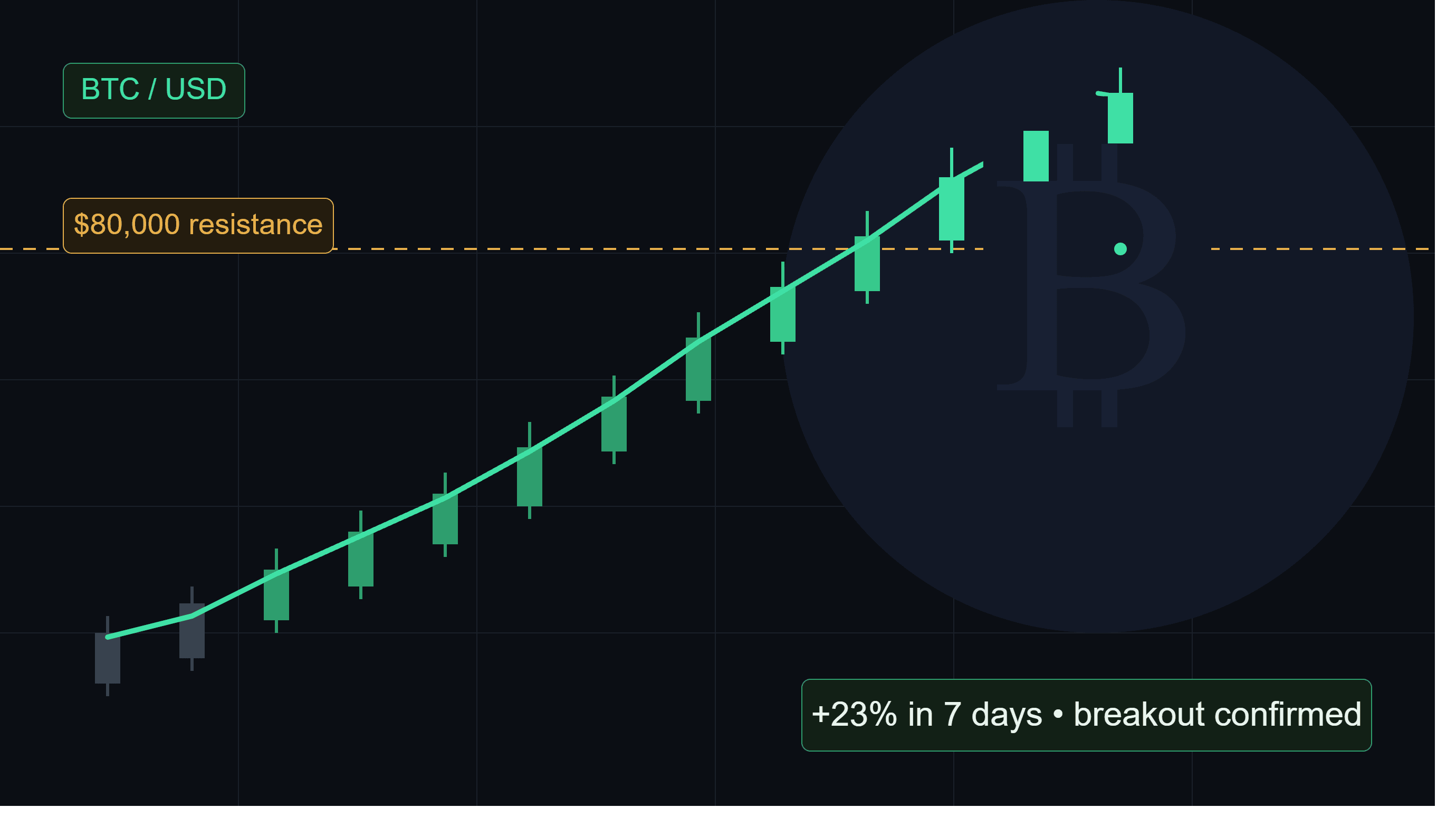
Bitcoin Just Hit $80,000: Last Week WEEX's Prediction Came True — What's Next?
Bitcoin hit $80,000 as WEEX predicted last week. See what drove the breakout, current key levels, and whether $90,000 is next.
The Twilight of Native Crypto
Nikita Bier Charges $500 Per Minute for Consulting Services
Andrew Kang's Shareholder Letter: Robotics Investment Reaches a Turning Point, Private Valuations Still Severely Lagging
Bitcoin Spot Demand: The Signal That Hadn't Reappeared Since the October 2025 Record
Vietcombank Warns of AI-Driven Fraud
$1 Billion in 48 Hours: X Prepares Crypto Trading Function on Feed