
Russia Destroys 50% of Warehouses in Kyiv Region: Impact on Retail and Prices

 Prefer us on Google


The warehouse real estate market in the Kyiv region has lost more than half of its pre-war space, forcing major retail chains and logistics operators to restructure their supply chains. The shortage of available space may increase rental rates by 7-10%, raise transportation costs, and affect product prices.
This is reported by Delo.ua, citing a message from LIGA.net.
Before the full-scale invasion, the total volume of warehouse real estate in the Kyiv region was about 2 million square meters. Military losses have already exceeded 1 million square meters, and with the latest attacks, they could reach over 1.2 million square meters.
In 2025 and the first half of 2026, developers introduced record volumes of new warehouse real estate. Just last year, the market was replenished with 216,000 square meters — the highest figure since 2008. However, new construction is not keeping pace with the destroyed areas.
There are almost no free spaces left in the Kyiv region. According to Yaroslav Horbushko, director of the capital markets department at Expandia, only individual small premises ranging from 500 to 1,000 square meters are available on the market.
At the same time, there are virtually no large blocks of 10,000 square meters or more, which are necessary for retail chains and logistics operators.
Kirill Kravchenko, managing partner at A&K Real Estate Consulting, predicts that due to the shortage of warehouse space, rental rates may rise by 7-10%.
Due to the loss of large complexes, companies will have to change established routes, relocate inventory, rent several smaller properties instead of one hub, and increase the number of shipments between warehouses and stores. Additional business expenses may be partially passed on to the prices of goods for end consumers.
On the night of August 5, a Russian attack struck ten warehouse facilities in the Kyiv region, with a total area of about 100,000 square meters. Companies are still clarifying the extent of the destruction.
- The Amtel logistics complex, with an area of about 100,000 square meters, was destroyed on July 19 along with the products of tenants, including WineTime and Goodwine.
- During the attack on August 5, the RLC warehouse complex, with an area of 65,000 square meters, was damaged, but the actual area of damage is still being determined.
- The Raben Ukraine complex, with an area of 65,000 square meters, was also damaged, but the exact losses have not yet been disclosed.
- In the village of Chaiky, the main logistics hub of MTI Group — the Denka Logistics complex — was destroyed, with warehouse area losses estimated at 20,000 square meters. The destroyed complex provided goods for Intertop, Pandora, and the Samsung Experience Store network.
- Novus warehouse facilities were also damaged, but the area of destruction has not been specified. The company reported extensive destruction and a complete halt to operations at the site.
- Rozetka lost warehouse facilities and goods in Brovary, Kyiv region, and co-founder Vladislav Chechetkin estimated the damage in billions of hryvnias. The structure was destroyed to the foundation and will no longer be able to operate. The site continued to be targeted by enemy strikes, particularly being attacked by Shahed-type kamikaze drones.
- In Kyiv, the sorting center of "Nova Poshta" was destroyed, resulting in the deaths of three people and injuries to eight others. Just days before, two more of the company's facilities were destroyed.
- Fires broke out at two distribution centers of Fozzy Group, which develops the "Silpo" network; the company reported the deaths of six workers.
- As a result of the Russian attack, the logistics partner Bosch's facility was destroyed, where products for various business areas were stored, including mobility, consumer goods, and industrial technologies. According to preliminary estimates, all Bosch products stored at the warehouse were destroyed. Bosch, together with its logistics partner, is assessing the scale of the losses.
- During the same attack, two logistics facilities of the "Epicenter" network were hit, and the extent of the damage is being clarified.
- As a result of the enemy attack on the night of August 5, a logistics complex with PUMA brand products was destroyed. The company warned of possible supply disruptions and limited product availability in the Ukrainian market in the near future.
- Due to the Russian attack, the central warehouse of Liqui Moly Ukraine — the official supplier of motor oils, lubricants, and automotive chemicals to the Ukrainian market — was completely burned down. The team is working on restoring supplies, regrouping warehouse stocks, and setting up new logistics routes. The distributor does not intend to stop its operational activities.
Additionally, Prime Minister Sergey Koretsky held an urgent meeting yesterday with representatives of businesses, retail, and logistics companies due to systemic Russian strikes on enterprises that supply goods to millions of Ukrainians. The main task of the government is to prevent disruptions in the supply of food, medicines, and other essential goods, primarily for frontline regions.
-- Price
This content is provided for general informational purposes only and doesn't constitute financial, investment, legal, or tax advice. Any events, rewards, online promotions, or related information mentioned herein should not be considered a recommendation, solicitation, or invitation to purchase, sell, trade, or otherwise deal in any crypto assets. Crypto assets are highly volatile and may result in loss. The availability of WEEX services, products, and related events may vary by region. You are responsible for ensuring that your participation is in accordance with applicable local laws and regulations.
You may also like

Andrew Kang's Shareholder Letter: Robotics Investment Reaches a Turning Point, Private Valuations Still Severely Lagging

Bitcoin Spot Demand: The Signal That Hadn't Reappeared Since the October 2025 Record

Vietcombank Warns of AI-Driven Fraud

$1 Billion in 48 Hours: X Prepares Crypto Trading Function on Feed

The forex complex: How retail traders are adapting to volatile 2026 markets

Trump Beats the Fed: How Trading Boom Explodes in the UAE

Crypto investors should favor systematic strategies over Fed predictions, Moon Pursuit Capital says

Crypto: Solana ETFs Record Their Biggest Day of the Year

Xbox and PlayStation Reassess Their Multiplatform Strategy, Emphasizing Exclusivity Again

Interview: Aptos CEO on AI Agents, Stablecoins, and Machine Commerce

BlackRock Lowers Minimum Investment for Bitcoin ETF to $1 Million
Previously Bearish on Crypto Market, Jiang Zhuoer Quickly Turns Bullish: Ethereum is the Engine of the Bull Market

Michael Saylor Targets Bitcoin Orthodoxy: 'Satoshi Is Not a Prophet'

Strive by Vivek Ramaswamy Becomes the 7th Largest Public Holder of Bitcoin

The Best AI Models for Trading: A Comparison of the Top 10 Models
Enflame, the Chinese competitor of Nvidia in AI chips, goes public

AI is in a Credit Expansion Phase: The Stronger AI Becomes, the More the Federal Reserve Needs to Cut Rates

Short-Term U.S. Treasury Holdings Decrease by $29 Billion, Testing Demand for Stablecoins

Analysis of Mining Machine Asset Depreciation and Tax Cost Recovery
Bitcoin Transfer by Metaplanet: Sale or Just Custody on Coinbase?
Opinion: The Bull Market Has Arrived, How to Position in This Cycle?
80% of Gas Stations in Russia Face AI-95 Gasoline Shortage
Bitcoin Bull Run: Arthur Hayes Sees Crypto Market Soaring Higher

Goldman Sachs Optimistic About Crypto Brokerage Trading Platforms: Can the Market Support a New Cycle?
Strive CEO: The Bitcoin Bull Market Has Just Begun, ASST Has Passed Its Bottom
Ravencoin (RVN) Price Forecast for 2026–2050

AI Agent's 'Coming of Age': What Step Is Missing from Simulation Training to Real Trading?
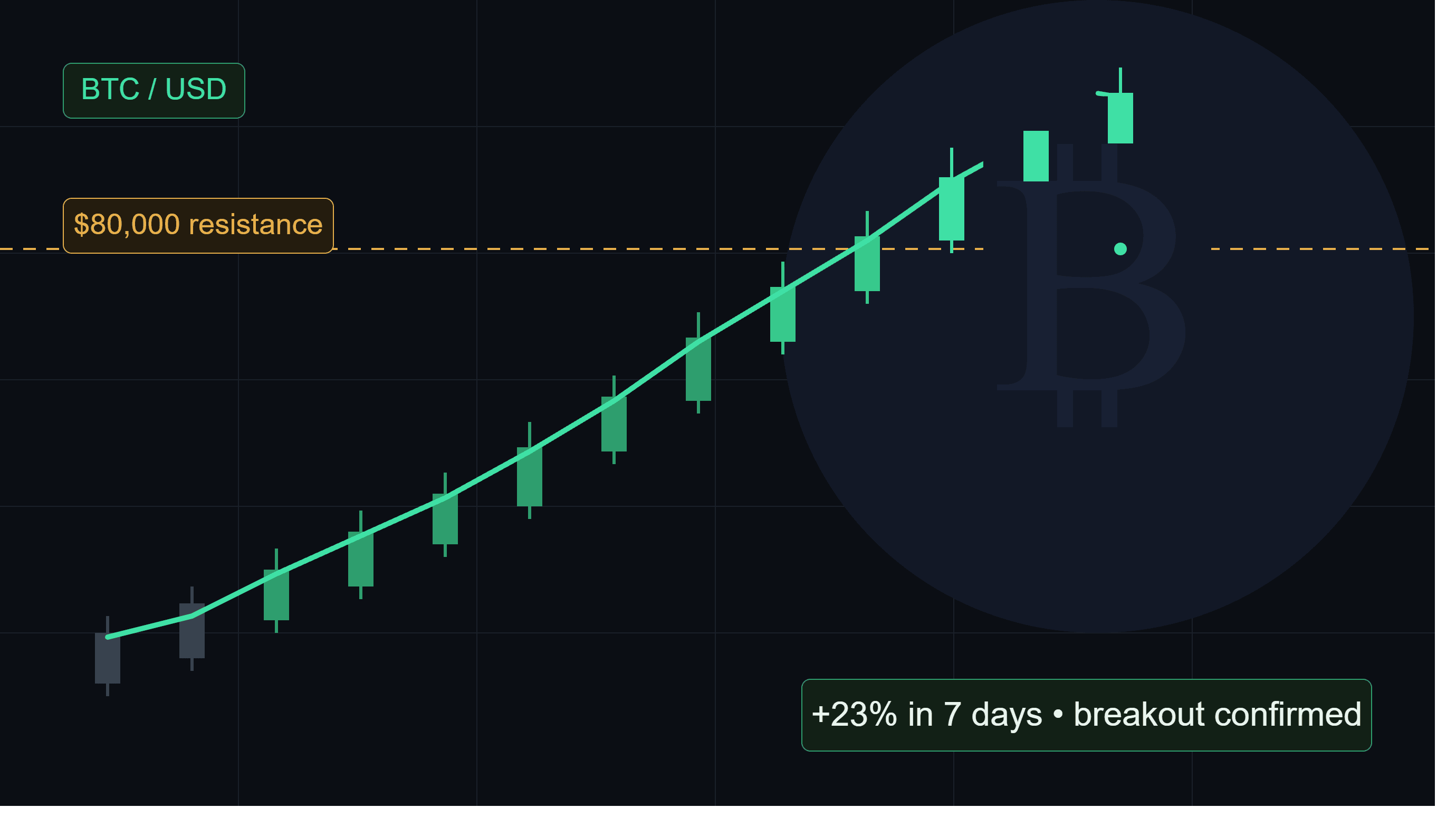
Bitcoin Just Hit $80,000: Last Week WEEX's Prediction Came True — What's Next?
Bitcoin hit $80,000 as WEEX predicted last week. See what drove the breakout, current key levels, and whether $90,000 is next.
Mining Artificial Intelligence: Why Bitcoin Miners Are Changing Their Business Model

CFTC Considers the Viability of Perpetual Futures in GPU Computing
Andrew Kang's Shareholder Letter: Robotics Investment Reaches a Turning Point, Private Valuations Still Severely Lagging
Bitcoin Spot Demand: The Signal That Hadn't Reappeared Since the October 2025 Record
Vietcombank Warns of AI-Driven Fraud
$1 Billion in 48 Hours: X Prepares Crypto Trading Function on Feed
The forex complex: How retail traders are adapting to volatile 2026 markets
Trump Beats the Fed: How Trading Boom Explodes in the UAE