
Forbes 2026 Prediction: AI, Robots, and Blockchain Will Converge

 Prefer us on Google

Original Title: 14 Predictions That Will Redefine AI, Robots, And Blockchain In 2026
Original Author: Sandy Carter, Forbes
Translation: Peggy, BlockBeats
Editor's Note: 2026 will not be the era of a single technology, but a key moment of multidimensional deep integration of AI, blockchain, robots, Web3, and more. AI agents need blockchain to verify identity and behavior, robots collaborate with intelligent entities through A2A protocols, marketing is shifting towards machines, and Web3 is quietly becoming the underlying force.
This article compiles 14 transformative predictions for the future, revealing not only trends but also reminding businesses and individuals that speed, trust, responsibility, and innovation will determine who succeeds in the future. The future is not science fiction but a reality that is rapidly approaching.
The following is the original text:
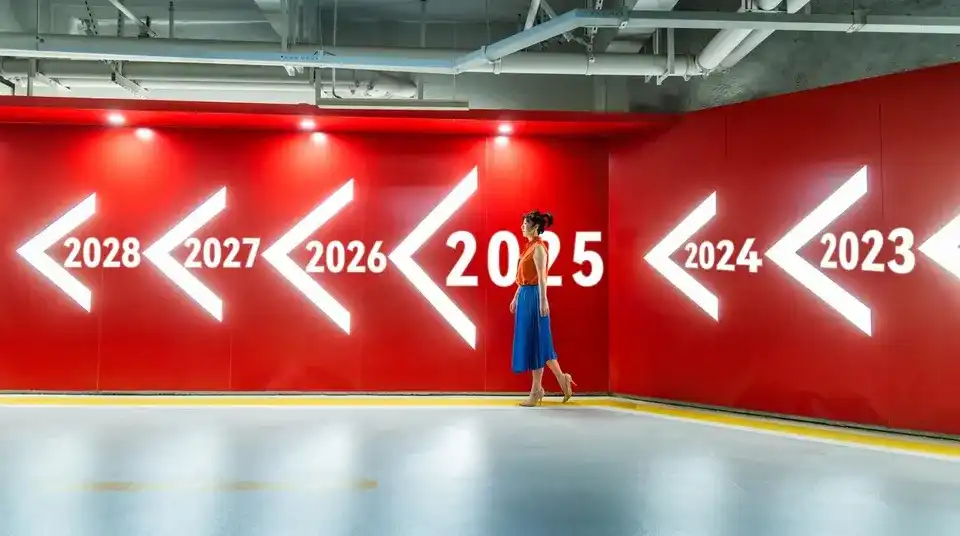
14 Major Predictions That Will Redefine Artificial Intelligence, Robots, and Blockchain in 2026
These 2026 predictions about AI, blockchain, robots, and the overall business landscape reveal the breakneck speed of technological transformation and integration, as well as how leaders must now rebuild trust and redefine work and experiences.
I used to read "Alice's Adventures in Wonderland" to my daughters, and there is a line that has stuck with me: Alice says she must run at least twice as fast as usual to stay in one place. That's exactly how the world feels today.
Technological advancements are happening so rapidly that even envisioning what 2026 will look like requires all-out effort. Companies are already shifting their marketing to AI agents instead of humans; robots are being sold as holiday gifts; AI assistants make decisions for us before we even wake up; blockchain is being adopted by more businesses.
Based on current trends and future signals, here are my predictions for 2026.
I look forward to hearing your thoughts, your reactions, and any ideas you think I should add.
1. Blockchain Becomes AI's Trust Network
Blockchain is evolving into a trustworthy infrastructure.
By 2026, more AI companies will integrate blockchain for purposes such as signature, source tracing, and verification. As autonomous agents carry out more operations, businesses will rely on immutable on-chain logs to understand what happened and why.
Each significant agent action will be recorded in a lightweight ledger, enabling compliance, governance, and accountability at scale, ensuring trust, as trust has become something that must be proven.
2. High-Quality Human Content, Not AI Content, Becomes the New Trust Signal
This shift has already begun.
Some platforms have started adding "authenticity labels." By 2026, this will become a competitive advantage, almost synonymous with "the most human-centric company wins." As AI-generated "junk content" floods the internet, human-originated storytelling will become a scarce high-value "currency."
Marketing thought leader Mark Schaefer describes this moment very accurately. He once told me, "No matter what our AI future may hold, human art will endure. Art is the interpretation of the human experience; it builds emotional bonds between us. Therefore, organizational content that approaches an artistic level — authentic, original, vulnerable — will be seen as a luxury in the eyes of the customer."
In a world inundated with synthesized content, the human voice, authentic experiences, and original creativity stand out more than ever. Human insight will become a new ranking factor for human and AI agents.
3. Marketing Begins Targeting Both AI Agents and Humans Simultaneously
This trend has already manifested in our shopping experiences. For example, Walmart's Sparky assistant can already compare products, filter reviews, and build a shopping cart without waiting for human input. Instacart, Amazon, Shopify, and Expedia are all using similar systems. Marketing is no longer just about persuading humans; it also has to convince the intelligent agents representing them.
These agents will consider verifiable performance, trustworthy reputations, transparent pricing, and machine-readable disclosures. Just as search engine optimization reshaped marketing twenty years ago, optimization for AI agents will become a necessary skill for every brand and marketer.
And guess what? In the coming years, brands will also target robots and humanoid forms for marketing!
-- Price
4. Blockchain-Based AI Agent Verification Becomes Essential
AI agents are becoming increasingly common. Enterprises are deploying a large number of autonomous agents that can access sensitive data, initiate actions, and even make payments. By 2026, verification will no longer be optional but a core operational requirement.
UtopIQ is one of the early signals of this transformation. Their platform has introduced what they call an AI Agent Control Panel, which ensures that agents operate only within authorized boundaries through dynamic credentials and blockchain-supported audit logs. In their words, AI must operate under the principle of "informed by design," where every agent action should be "transparent, authorized, and auditable."
The following UtopIQ control panel showcases enterprises' supervision of AI agents, including tracking active agents, credential issuance, and audit results. It ranks agent categories by risk level, highlights areas that require access restrictions or scope expansion, and reveals compliance or security vulnerabilities. This panel helps enterprises monitor agent behavior, enforce governance, and make informed decisions regarding data access and configurations. This is just the beginning of the corporate development trends we are witnessing in 2026.
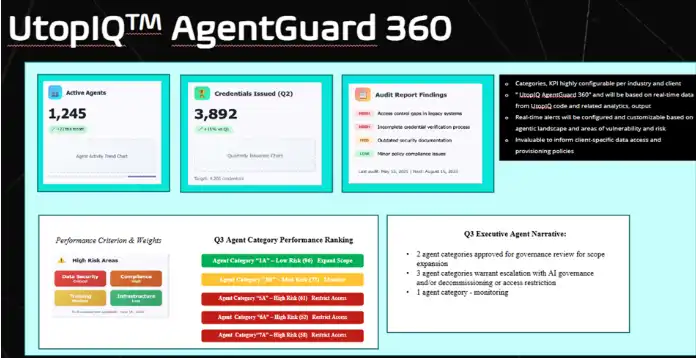
In the future, we need to verify AI agents and ensure an understanding of their performance.
Enterprises are moving in this direction, endowing agents with identity, wallets, roles, permissions, audit trails, and performance monitoring, seeing them as digital employees rather than just tools. In a conversation with UtopIQ's Co-Founder and CEO Kristen Schmidt, she referred to this new trend as the "Trust Layer of AI."
5. From AI Ethics Theory to Verifiable Practice
Regulatory bodies have already mandated interpretability and source traceability in decisions involving recruitment, loans, healthcare, and risk.
By 2026, insurance companies will introduce new accountability models for AI-reliant enterprises.
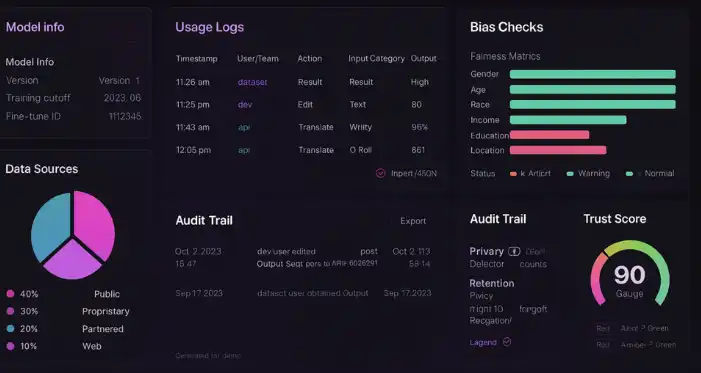
Sandy Carter showcased the upcoming Ethics Control Panel in her SXSW keynote, where enterprises will not only have to prove that models can perform but also that they operate responsibly. Ethical performance scores will become standards to measure transparency, fairness, and security. AI ethics will shift from philosophical discussions to data-driven hard requirements.
6. Specialized Robots Lead the Market, Cooking Emerges as a Hit Category
By 2026, we will clearly see the triumph of specialization. Warehouse robots (Mujin), surgical robots (Da Vinci), and vertical-specific AI agents (in finance, HR, compliance) will be the first to succeed because they deliver a clear ROI, predictable savings, and immediate value far beyond general-purpose machines.
Among specialized robots, cooking robots will take the lead. In household settings, cooking robots will prepare fresh meals at an affordable price. For example, Posha allows you to choose from thousands of recipes, add fresh ingredients and seasonings, and then simply step back while it completes the cooking of the entire meal. Futurist Robert Scoble (an early adopter of humanoid robots) accurately commented on this: "We have misunderstood robots entirely. We were obsessed with humanoid robots, but the real revolution starts at the dining table." Cooking connects time, cost, nutrition, and family happiness.
The first mainstream home robot will not be a humanoid robot that can do everything but a specialized system that addresses a common need.

Posha, this specialized robot, allows you to choose from over 1000 recipes, add fresh ingredients and seasonings, and then automatically cook the entire meal
7. A Children's Robot Toy Popular in Christmas Sales This Year Will Be Exposed for Misusing Children's Data
I truly hope this prediction does not come true, but I am deeply concerned. The smart toys and home robots sold during this holiday season have been collecting children's audio, video, and behavioral signals. Since home robots are still unregulated, we will see the first major data misuse scandal in 2026.
A children's robot will be exposed for storing or sharing sensitive information without proper consent. This will serve as a wake-up call, prompting regulatory bodies, parents, and developers to prioritize safety and privacy in the consumer robotics field.
8. AI Agent-to-Agent Communication Protocol (A2A) Becomes the Universal Language for Robots and Agents
AI and robotics companies have been developing early-stage communication architectures to enable agents and machines to coordinate tasks. By 2026, this will evolve into a mature Agent-to-Agent Communication Protocol (A2A). Robots, digital assistants, enterprise systems, and autonomous tools will begin real-time negotiation of responsibilities and security boundaries. A2A will become the communication bedrock of the autonomous world, much like how HTTP standardized the early internet.
In a conversation with PSYONIC Founder and CEO Dr. Aadeel Akhtar, he stated: "The shared A2A protocol will redefine human-machine interaction, allowing robots and AI agents to understand tasks in a consistent and intuitive manner. Today, each system has its own language, causing friction for developers and users. A common language makes it easier for robots to learn from humans and collaborate with other machines. By 2026, this interoperability will become an industry standard, opening doors to breakthroughs in fields such as prosthetics and personal robotics."

PSYONIC Founder and CEO Dr. Aadeel Akhtar demonstrated the powerful capabilities of a bionic hand on stage at SXSW Sydney
9. Business Models Disrupted by AI Agents
The SaaS model is crumbling. When AI agents can do the work of entire teams, seat-based software becomes meaningless. Enterprises will shift towards paying for agent behavior, outcomes, and ongoing workflows rather than for features in static applications. Winners will build agent ecosystems, while losers will be stuck in suddenly outdated app paradigms.
This will force executives into strategic reevaluation.
The core question for CEOs in 2026 will be: Which tasks should humans be responsible for? Which tasks should agents handle? Which tasks should be a shared responsibility?
Businesses embracing agentification restructuring will achieve double-digit productivity gains. Those resisting change will be reshuffled by competitors.
10. Web3 Stealthily Enters the Mainstream
By 2026, Web3 will be widely used but no longer extensively discussed.
Pudgy Penguins enter millions of homes through Walmart; Polymarket influences public discourse; Base and TON support seamless consumer-grade applications; Web3 identity systems simplify user registration; AI companies integrate blockchain for signatures, provenance tracking, and validation.
11. Visual AI Virtual Avatars Become the New Frontier of Customer Experience
When AI agents have recognizable faces and avatars, powerful changes occur: people find it easier to connect, and trust forms more quickly.
A well-designed virtual avatar will become a strategic brand asset.

Miku is a decentralized fashion AI agent that can provide styling advice.
In a conversation with Meta Fashion House Founder and CEO Astrid Pilla, she stated, "When AI agents become visually identifiable, powerful changes occur: people find it easier to connect, and trust is formed more quickly."
She added, "A well-designed virtual avatar will become a strategic brand asset. By 2026, most companies will have laid the groundwork for AI agents, and by 2027, the front end of a brand will no longer be a website or social media but their AI agent. A visual, human-centric virtual image will become the new frontier of customer experience, capable of negotiating, recommending, and establishing trust at scale, something any website can't do."
12. Candidates Who Don't Use AI in Interviews Will Lose Competitiveness
Recruiters at large companies have started to pay attention to whether candidates use AI to prepare for interviews, analyze job descriptions, or structure their responses.
Leaders are beginning to believe that if candidates don't use AI in interviews, they may not use it in their work.
AI literacy will become a basic requirement. Not using AI will become a disadvantage, much like lacking computer skills in the early 2000s.
13. Tech Women on Boards Will Outperform in the AI Era
This trend is already emerging today, with the gap becoming increasingly evident. McKinsey's "2025 AI State of Play" report found that only 17% of companies oversee AI at the board level, even as these systems reshape strategy, risk, and operations.
The Nasdaq Women's Leadership Index shows that companies with gender-diverse boards outperform in long-term value creation, governance quality, and innovation outcomes. For women who understand technologies like blockchain, AI, robotics, and quantum, this advantage will further accelerate.
Organizations like TechWomen4Boards and Extraordinary Women On Boards will become critical forces in finding the next generation of board members.
Tech-savvy women bring a systemic mindset, ethical depth, employee empathy, and an overall risk perspective that aligns perfectly with autonomous systems and digital transformation challenges.
Leading companies in 2026 will be those that combine gender diversity in the boardroom with deep technical expertise.
14. In 2026, It's Not the AI Moment, It's the Fusion Moment
What will set 2026 apart is not a single trend but rather integration.
AI agents need blockchain for trust and identity; robots require A2A protocols for interaction with agents and humans; marketing needs to target machines, not just humans; stablecoins will become a primary payment method; business models will shift from "seats" to "outcomes"...
All of these will require governance frameworks that didn't exist two years ago. Organizations that can see these connections clearly and take decisive action will thrive; those that still treat each technology as a standalone project will struggle.
The future will not be fragmented by technologies like AI, blockchain, or quantum; neither will 2026.
[assets/2025/12/02/14-predictions-that-will-redefine-ai-robots-and-blockchain-in-2026/" target="">Original Article Link]
This content is provided for general informational purposes only and doesn't constitute financial, investment, legal, or tax advice. Any events, rewards, online promotions, or related information mentioned herein should not be considered a recommendation, solicitation, or invitation to purchase, sell, trade, or otherwise deal in any crypto assets. Crypto assets are highly volatile and may result in loss. The availability of WEEX services, products, and related events may vary by region. You are responsible for ensuring that your participation is in accordance with applicable local laws and regulations.
You may also like

Stablecoin issuer JPYC is about to complete its Series B financing, with participation from Life Design Fund and others, raising a total of approximately 5 billion yen

Ningde Times is planning to participate in DeepSeek's financing

AIDC, computing power leasing, and cloud: The "three-part thesis" of AI transformation in cryptocurrency mining farms

Tom Lee: Ethereum will be ensured to become the settlement layer for the future of finance and AI, continuing to be optimistic about ETH

Paradigm announced the open-source self-developed AI Agent Centaur, claiming it has completely transformed the workflow of the fund
MY Group strategic investment in AI derivatives infrastructure ClawMax 3 million USD

Viewpoint: Web3 does not need a savior, and Ethereum should maintain a high degree of neutrality
Insiders: DeepSeek is forming a Harness team to compete with Claude Code
SpaceX officially submitted its prospectus, unveiling the largest IPO in history

Cryptocurrency custody company Copper is seeking to sell the company at an estimated valuation of around $500 million
SpaceX is in discussions with other companies about computing power services similar to Anthropic
Sentient launches the latest season of the Hackathon Challenge 0, offering over $6,000 and points as rewards
NVIDIA CEO: Vera CPU opens up a new $200 billion market for NVIDIA

Helio Protocol's XAUT ecosystem has reached a strategic cooperation with Dephy and APRO

Manus plans to raise $1 billion for a buyback and seeks to be listed in Hong Kong

Bitget partners with UNICEF to launch the second year of cooperation, adding AI courses

Eightco Holdings (NASDAQ: ORBS) Reveals $336M in Digital Assets and Equity Investments
Key Takeaways: Eightco’s treasury includes $90M in OpenAI, $25M in Beast Industries, 11,068 ETH, and $283 million WLD…

Ripple Sets 2028 Deadline for Quantum-Ready XRPL
Key Takeaways: Ripple commits to a 2028 deadline for XRPL’s quantum-readiness, focusing on quantum-resistant cryptographic systems. Google’s research…
Mozilla Employs Anthropic AI to Detect 271 Firefox Vulnerabilities
Key Takeaways: Mozilla’s internal test with Anthropic’s Claude Mythos AI found 271 vulnerabilities in Firefox, all patched this…

US Law Firm Issues Apology Over AI-Caused Legal Filing Errors
Key Takeaways: Sullivan & Cromwell admitted to submitting a court filing with around 40 incorrect citations caused by…

Uzbekistan Launches State-Endorsed Crypto Mining Zone with Tax Perks
Key Takeaways: Uzbekistan has initiated a regulated crypto mining zone in Karakalpakstan, effective April 20. Companies gain tax…
Summary of SpaceX IPO Prospectus Full Text

AI patent platform Stilta completes $10.5 million seed round financing, led by a16z

GitHub updates security incident investigation: An employee's device was compromised, involving a contaminated VS Code extension

The hacker group TeamPCP claims to have obtained the source code of about 4,000 private repositories from GitHub and is selling them

Ju.com Foundation strategically invests $10 million in SuiXi, leading the "AI + Blockchain" e-commerce sector
The manufacturing startup SendCutSend has completed a $110 million financing round, led by Paradigm and others

Real Vision founder: AI and cryptocurrency are reshaping the global economy at an exponential rate, and the cryptocurrency market size could reach 100 trillion dollars
Gate founder and CEO Dr. Han: Clarification of regulations and integration with TradFi become key trends

Fintech company Mercury completes $200 million financing, led by TCV
Stablecoin issuer JPYC is about to complete its Series B financing, with participation from Life Design Fund and others, raising a total of approximately 5 billion yen
Ningde Times is planning to participate in DeepSeek's financing
AIDC, computing power leasing, and cloud: The "three-part thesis" of AI transformation in cryptocurrency mining farms
Tom Lee: Ethereum will be ensured to become the settlement layer for the future of finance and AI, continuing to be optimistic about ETH
Paradigm announced the open-source self-developed AI Agent Centaur, claiming it has completely transformed the workflow of the fund
MY Group strategic investment in AI derivatives infrastructure ClawMax 3 million USD

Contents
Latest articles


Latest coin listings on WEEX


