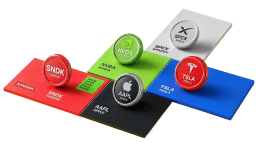
Chainlink brings US economic data to 10 blockchains

 Prefer us on Google


Chainlink has made six official U.S. economic data feeds covering GDP, inflation, and private domestic demand available across 10 public blockchain networks.
Summary
- Six feeds cover the level and annualized change of three U.S. economic indicators.
- 10 networks initially support the data, including Ethereum, Base, Arbitrum, and Avalanche.
- Monthly and quarterly updates follow the Bureau of Economic Analysis publication schedule.
- Onchain applications can use the figures in markets, financial products, and risk systems.
Chainlink said the U.S. Department of Commerce is using its oracle infrastructure to distribute macroeconomic statistics produced by the Bureau of Economic Analysis, giving blockchain applications access to government figures without requiring developers to enter each release manually.
The program covers real gross domestic product, the Personal Consumption Expenditures Price Index, and Real Final Sales to Private Domestic Purchasers. Each indicator is available through two feeds: one reports the current level, while the other shows its quarter-over-quarter change at an annualized rate.
Data is initially available on Ethereum, Arbitrum, Avalanche, Base, Botanix, Linea, Mantle, Optimism, Sonic, and ZKsync. Chainlink said support for other networks can be added in response to user demand.
Although Chainlink drew fresh attention to the arrangement in a recent X post, the feeds were first announced in August 2025. The Commerce Department worked with both Chainlink and Pyth Network at the time, using the two oracle providers to place selected BEA data on public blockchains.
Chainlink feeds deliver six US economic measures
Real GDP measures the value of goods and services produced in the United States after adjusting for inflation. The level feed reports the figure in billions of chained 2017 dollars, while the second feed records the quarter-over-quarter percentage change at a seasonally adjusted annual rate.
The PCE Price Index tracks changes in the prices U.S. consumers pay for goods and services. The Federal Reserve uses PCE data as its preferred inflation measure when assessing progress toward its 2% target, making the releases closely watched by investors across stocks, bonds, currencies and digital assets.
Chainlink's PCE feeds provide both the headline index level, with 2017 set as the base year, and the quarter-over-quarter annualized change. The BEA publishes monthly PCE estimates as part of its Personal Income and Outlays report, while quarterly readings also appear in the national economic accounts.
Real Final Sales to Private Domestic Purchasers, the third indicator, measures inflation-adjusted spending by consumers and private businesses. By excluding government spending, exports, and inventory changes, the figure provides a focused measure of private domestic demand, according to the BEA.
Its two feeds follow the same structure used for GDP: one reports the level in chained 2017 dollars, and the other gives the annualized quarterly rate of change. Chainlink updates the six feeds monthly or quarterly, depending on when the BEA releases the underlying figures.
Government data can support automated onchain products
Oracle networks connect blockchains with information created outside their systems. Smart contracts cannot retrieve government statistics on their own, so an oracle provides the data in a format that blockchain applications can read and use.
According to Chainlink, direct access to BEA figures could support inflation-linked digital assets, prediction markets, perpetual futures, and automated trading products. Developers may also use the feeds to build dashboards or adjust risk settings in decentralized finance protocols after a new economic report is published.
The data feeds do not release economic statistics earlier than the government's usual publication channels. Updates follow the BEA schedule, meaning onchain users receive the same underlying figures released to the public through official reports.
Chainlink said its feed infrastructure has received ISO 27001 certification and a SOC 2 Type 1 attestation. Such credentials concern the controls and information-security processes supporting the service; they do not remove the need for individual applications to manage smart-contract, market, and data-integration risks.
Commerce Department previously placed GDP on nine networks
The Chainlink feeds form one part of the Commerce Department's blockchain data program. In August 2025, the department separately published second-quarter U.S. GDP information across nine networks, including Bitcoin, Ethereum and Solana.
Commerce Secretary Howard Lutnick described the initiative as a way to make U.S. economic information globally accessible and resistant to alteration.
Publishing a hash on a blockchain differs from maintaining an oracle feed. A hash can help users confirm that a document has not changed, while a data feed places a specific value in a format that smart contracts can reference during automated transactions.
-- Price
Chainlink expands feeds for tokenized financial assets
Chainlink has also extended its data infrastructure to tokenized stocks and other real-world assets. On Aug. 26, the company introduced price feeds for Coinbase-issued versions of Nvidia, Apple, Meta, and Alphabet shares on Base.
The NVDAc, AAPLc, METAc, and GOOGLc feeds allow lending applications to calculate collateral values, borrowing limits, loan health, and liquidation thresholds. Coinbase currently limits the underlying tokenized stock products to eligible non-U.S. investors, meaning the Chainlink integration does not make the assets available to U.S. users.
In an Aug. 10 research note, Standard Chartered set a $200 target for LINK by the end of 2030. Analyst Geoff Kendrick based the forecast partly on expected growth in tokenized assets and decentralized finance, projecting that assets held on blockchains could reach $4 trillion by the end of 2028. The estimate represents the bank's forecast and is not guaranteed.
This content is provided for general informational purposes only and doesn't constitute financial, investment, legal, or tax advice. Any events, rewards, online promotions, or related information mentioned herein should not be considered a recommendation, solicitation, or invitation to purchase, sell, trade, or otherwise deal in any crypto assets. Crypto assets are highly volatile and may result in loss. The availability of WEEX services, products, and related events may vary by region. You are responsible for ensuring that your participation is in accordance with applicable local laws and regulations.
You may also like

MetaMask Wallet: How to Install and Use the Wallet

Over 100 Participants Close Ethereum Institutional Funding

Status Network announced its integration into the Linea ecosystem and will no longer launch an independent mainnet
DeFi has reached its most dangerous moment: the real vulnerabilities are not in the code
Aave updates the rsETH technical recovery plan, WETH LTV has been restored to pre-event levels

Morning News | AEON completes $8 million Pre-Seed round financing led by YZi Labs; Goldman Sachs liquidates XRP and Solana ETF holdings in Q1; Strategy increased its holdings by 24,869 BTC last week

The dYdX community voted to approve the proposal to "gradually close 12 markets."

$700 Million Annual Revenue, Yet Betting $10 Billion: IREN's Gamble for AI Computing Power

Breaking the 'Blame-Shifting Narrative' and Secret Governance: A Structural Bloodletting in Tokenomics and the Governance Challenge Behind Sun Yuchen's Lawsuit Against WLFI

Fairshake affiliate spends $189K as Auchincloss wins

Crypto: Token Buybacks Reach $640 Million in 2026

Finst Launches Tailored Offer for Institutional Investors in Europe

Fogo mainnet back online after recovery of 237 million stolen tokens

Understanding the Big Trends and Opportunities on Robinhood
What is open interest? The trading minute

Does YZi Labs Have Dreams?

Do AI Chip Earnings Move Bitcoin?
Maji Brother's Token Launch Fails Miserably, Old Players Fail in New Trenches

Bitcoin’s 316-day hashrate drought shows why AI could make this mining downturn harder to reverse
HuggingFace's 'AI Duck' Sells Out, Boosting Chinese Chip Supplier Rockchip

CryptoQuant: Trend Reversal Signal After 8 Months... Is the Bear Market Over?
Bitcoin leads Ethereum and Solana in decentralization, ARK finds
South Korea's Media Giants Etoday and Nexblock Partner with RootData to Strengthen Web3 Data Content Collaboration

Telegram Launches 'Gram Wallet' for Select Users

Why the Bond Market Sell-off Has Arrived

NVIDIA, Tesla or AMD? 10 Stocks to Watch in WEEX Stock Spot 2.0
Oil Nears $95 as Robinhood Chain Volume Rises to $1.6 Billion | WEEX TradFi Daily (Sep. 2, 2026)
Bitcoin: What convinces Americans to buy BTC?
South Korea's Sovereign AI: Why It Benefits Nvidia First, Not SK Hynix?

Can On-Chain Rollbacks Recover Stolen Assets?
MetaMask Wallet: How to Install and Use the Wallet
Over 100 Participants Close Ethereum Institutional Funding
Status Network announced its integration into the Linea ecosystem and will no longer launch an independent mainnet
DeFi has reached its most dangerous moment: the real vulnerabilities are not in the code
Aave updates the rsETH technical recovery plan, WETH LTV has been restored to pre-event levels
Morning News | AEON completes $8 million Pre-Seed round financing led by YZi Labs; Goldman Sachs liquidates XRP and Solana ETF holdings in Q1; Strategy increased its holdings by 24,869 BTC last week