
BitGo Korea Obtains VASP Registration in South Korea Ahead of Regulatory Tightening for Institutional Investors

 Prefer us on Google

BitGo Korea, the South Korean subsidiary of digital asset infrastructure provider BitGo, has obtained VASP (Virtual Asset Service Provider) registration from the South Korean FSC (Financial Services Commission). The approval date is August 18, 2026 (Tuesday), just two days before the entry review for VASPs becomes stricter on August 20.
With this registration, BitGo Korea will be able to provide cryptocurrency custody and remittance services to institutional investors and corporate clients in South Korea. As regulatory tightening approaches, BitGo chose to obtain registration directly through a newly established local entity rather than acquiring existing operators.
Direct Registration through Local Entity Without Relying on Acquisitions
BitGo Korea was established in 2024. While there are methods to enter the South Korean market through investments in or acquisitions of local companies that already have VASP registration, BitGo opted to meet regulatory requirements and obtain registration independently.
According to the company, this is the first case of a global digital asset firm establishing a new local entity in South Korea and obtaining VASP registration directly. BitGo Korea has built its security, AML (Anti-Money Laundering), internal controls, and operational systems in accordance with South Korean regulatory requirements.
Supporting this foundation is collaboration with major South Korean companies. In 2024, Hana Financial Group acquired 25% of BitGo Korea's shares, and SK Telecom acquired 10%, participating as strategic shareholders. With Hana Financial Group's strength in the financial sector and SK Telecom's expertise in authentication, identity verification, and security, they are establishing a framework for local business operations.
Mike Belshe, CEO of BitGo, indicated that this registration is an important step in the company's plan to build regulated infrastructure in major markets.
Approval Just Before Regulatory Tightening, Stricter Review from August 20
Immediately after BitGo Korea obtained its registration, the entry review for VASPs in South Korea was tightened starting August 20 (Thursday). The revised rules expand the review targets to include CEOs and controlling shareholders, and financial soundness, cybersecurity, internal controls, and AML systems will be more rigorously checked.
Applicants are required to maintain a debt ratio of 200% or lower and not have defaulted on debts in the past three years. Internal management systems, including appropriate personnel, physical infrastructure, and customer protection, will also be subject to review.
On the other hand, this registration is specifically for custody and remittance services aimed at institutional investors and corporate clients, and does not imply that operations of a won-denominated cryptocurrency exchange for individual investors are permitted.
BitGo operates under regulation in the United States, Singapore, Germany, Dubai, and other locations. With the acquisition of registration in South Korea, the company adds a new market to its regulated business operations.
-- Price
This content is provided for general informational purposes only and doesn't constitute financial, investment, legal, or tax advice. Any events, rewards, online promotions, or related information mentioned herein should not be considered a recommendation, solicitation, or invitation to purchase, sell, trade, or otherwise deal in any crypto assets. Crypto assets are highly volatile and may result in loss. The availability of WEEX services, products, and related events may vary by region. You are responsible for ensuring that your participation is in accordance with applicable local laws and regulations.
You may also like
Bitcoin Spot Demand: The Signal That Hadn't Reappeared Since the October 2025 Record

Vietcombank Warns of AI-Driven Fraud

$1 Billion in 48 Hours: X Prepares Crypto Trading Function on Feed

The forex complex: How retail traders are adapting to volatile 2026 markets

Trump Beats the Fed: How Trading Boom Explodes in the UAE
Crypto investors should favor systematic strategies over Fed predictions, Moon Pursuit Capital says

Crypto: Solana ETFs Record Their Biggest Day of the Year

Xbox and PlayStation Reassess Their Multiplatform Strategy, Emphasizing Exclusivity Again

Interview: Aptos CEO on AI Agents, Stablecoins, and Machine Commerce
BlackRock Lowers Minimum Investment for Bitcoin ETF to $1 Million
Previously Bearish on Crypto Market, Jiang Zhuoer Quickly Turns Bullish: Ethereum is the Engine of the Bull Market

Michael Saylor Targets Bitcoin Orthodoxy: 'Satoshi Is Not a Prophet'

Strive by Vivek Ramaswamy Becomes the 7th Largest Public Holder of Bitcoin

The Best AI Models for Trading: A Comparison of the Top 10 Models
Enflame, the Chinese competitor of Nvidia in AI chips, goes public

AI is in a Credit Expansion Phase: The Stronger AI Becomes, the More the Federal Reserve Needs to Cut Rates
Short-Term U.S. Treasury Holdings Decrease by $29 Billion, Testing Demand for Stablecoins

Analysis of Mining Machine Asset Depreciation and Tax Cost Recovery
Bitcoin Transfer by Metaplanet: Sale or Just Custody on Coinbase?
Opinion: The Bull Market Has Arrived, How to Position in This Cycle?
80% of Gas Stations in Russia Face AI-95 Gasoline Shortage
Bitcoin Bull Run: Arthur Hayes Sees Crypto Market Soaring Higher

Goldman Sachs Optimistic About Crypto Brokerage Trading Platforms: Can the Market Support a New Cycle?
Strive CEO: The Bitcoin Bull Market Has Just Begun, ASST Has Passed Its Bottom
Ravencoin (RVN) Price Forecast for 2026–2050

AI Agent's 'Coming of Age': What Step Is Missing from Simulation Training to Real Trading?
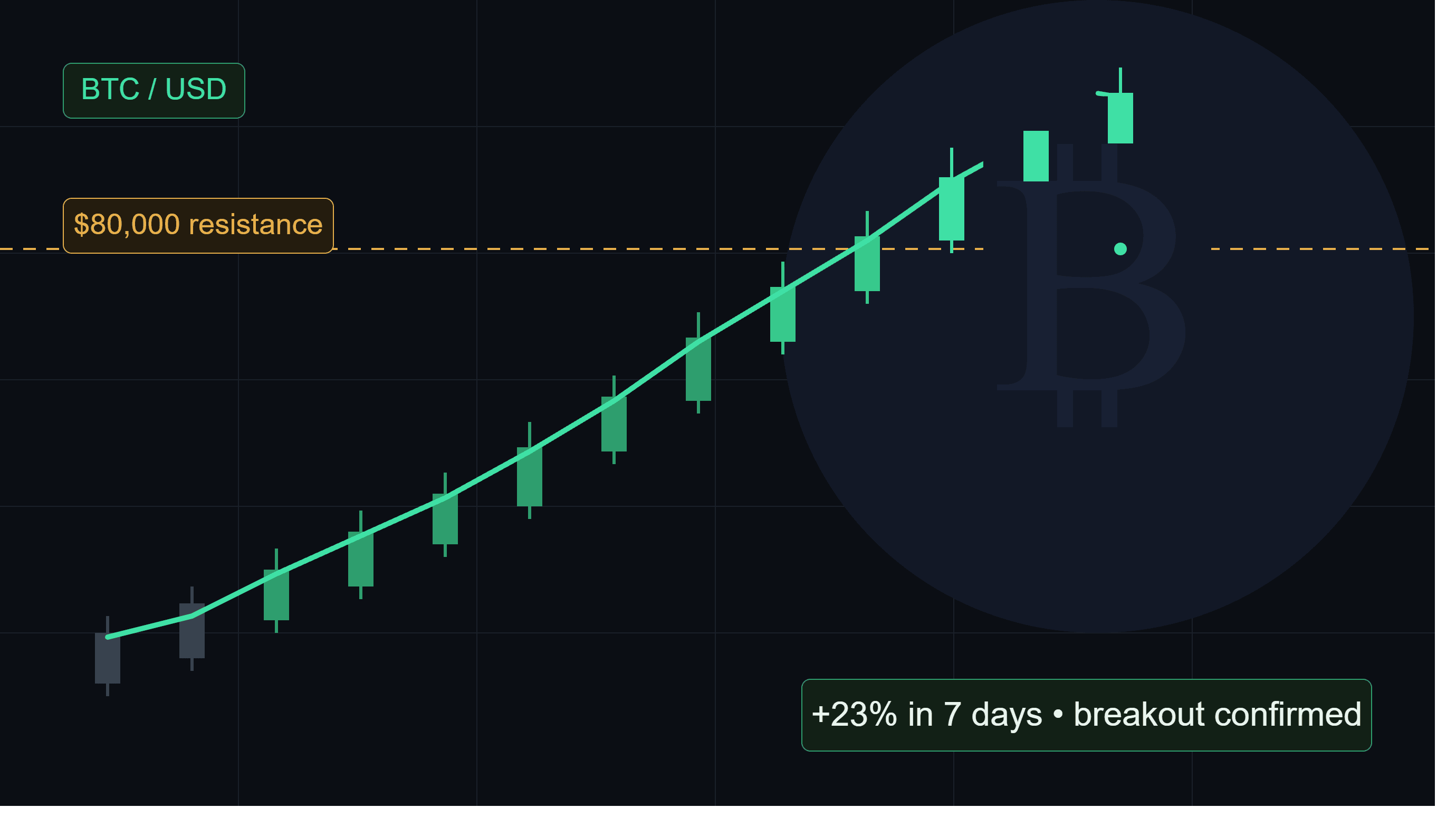
Bitcoin Just Hit $80,000: Last Week WEEX's Prediction Came True — What's Next?
Bitcoin hit $80,000 as WEEX predicted last week. See what drove the breakout, current key levels, and whether $90,000 is next.
Mining Artificial Intelligence: Why Bitcoin Miners Are Changing Their Business Model

CFTC Considers the Viability of Perpetual Futures in GPU Computing
Bitcoin is once again being 'buried' on social media: what this could mean for its price
Bitcoin Spot Demand: The Signal That Hadn't Reappeared Since the October 2025 Record
Vietcombank Warns of AI-Driven Fraud
$1 Billion in 48 Hours: X Prepares Crypto Trading Function on Feed
The forex complex: How retail traders are adapting to volatile 2026 markets
Trump Beats the Fed: How Trading Boom Explodes in the UAE
Crypto investors should favor systematic strategies over Fed predictions, Moon Pursuit Capital says