
Is WEEX P2P Safe in Pakistan? What PKR Traders Should Know

 Prefer us on Google

If you are buying or selling USDT with Pakistani rupees (PKR), safety is one of the most important things to consider before placing a P2P order. Unlike regular crypto trading, P2P transactions involve direct fiat payments between buyers and sellers, which creates risks such as fake payment proof, third-party payments, and off-platform scams.
So, is WEEX P2P safe in Pakistan? WEEX P2P provides features such as merchant verification, identity checks, platform-based orders, and an appeal process to help manage transaction risks. However, these measures cannot remove every risk. Users still need to choose merchants carefully, verify payments, and follow the official order process.
Here is what PKR traders should know before using WEEX P2P.
How Does WEEX P2P Manage Trading Risks?
WEEX P2P lets users compare merchants before starting a transaction. Traders can check factors such as merchant type, price, payment method, trading limits, and trading history. Users can also filter for Verified Merchants, which can be a useful starting point when choosing a counterparty.
However, a Verified Merchant should not automatically be considered risk-free. WEEX recommends looking at several factors together rather than choosing an offer based only on the USDT/PKR price.
Identity and payment information are also important. The name on a P2P payment account should match the identity used for verification. This helps users identify unusual third-party payments and reduces confusion if a transaction becomes disputed.
WEEX also encourages users to keep P2P communication and transactions on the platform. Order and chat records can provide useful transaction evidence if something goes wrong.
What Are the Main Risks of PKR P2P Trading?
One common P2P risk is fake payment proof. A buyer may send a bank screenshot or SMS claiming that PKR has been transferred and ask the seller to release USDT. Screenshots and messages can be falsified, so sellers should check their actual receiving account before releasing crypto. WEEX's P2P safety guidance specifically warns about fake screenshots and SMS notifications.
Third-party payments are another risk. If the person sending the money is different from the verified user in the P2P order, the transaction may become harder to verify and could lead to disputes. Users should check whether payment account information matches the verified identity involved in the trade.
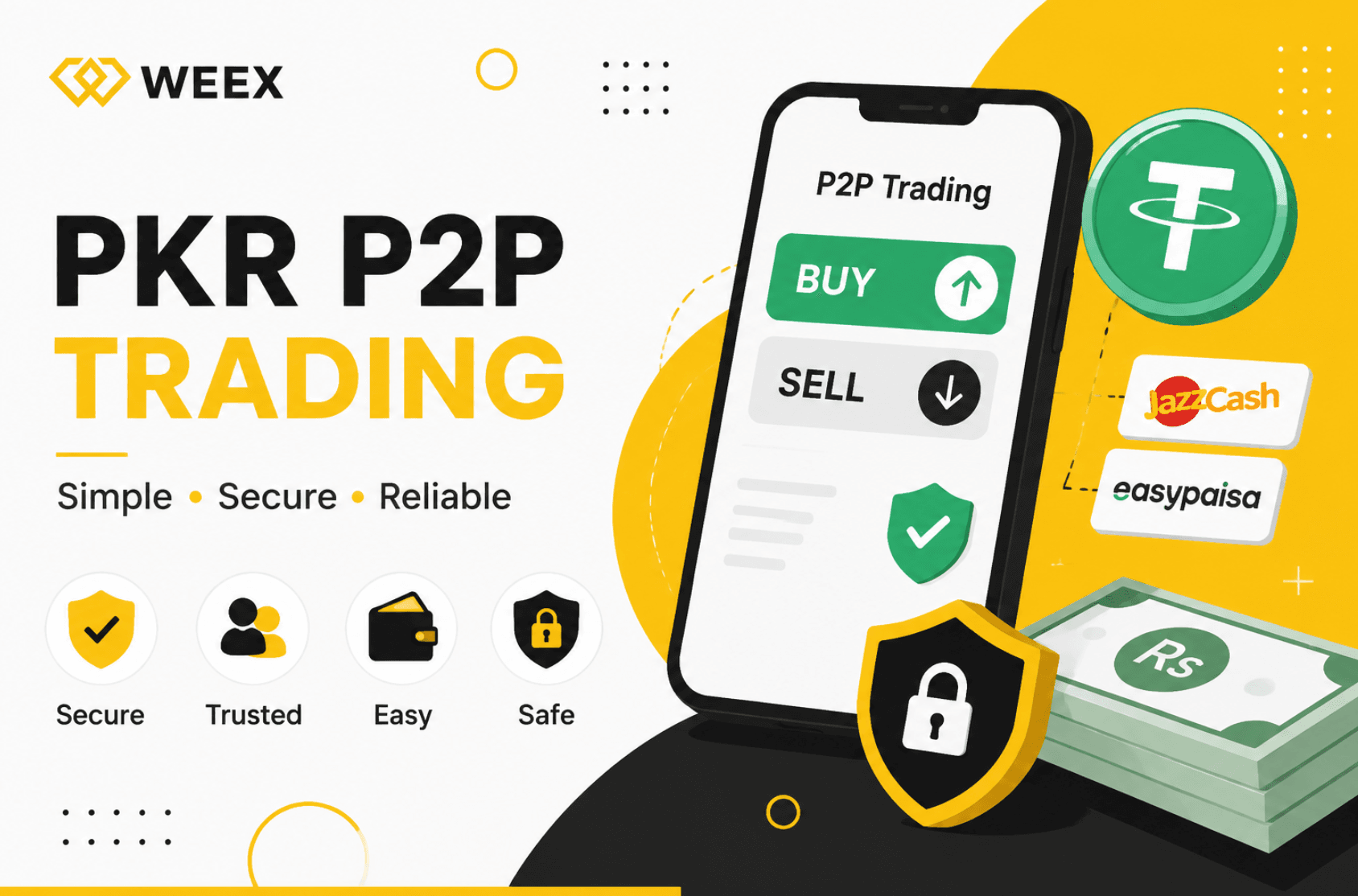
Off-platform trading can also increase risk. Be cautious if another trader asks you to move the deal to WhatsApp, Telegram, or another private channel, especially if they promise a better USDT/PKR rate. Keeping the transaction within the official P2P order makes it easier to keep a clear record of what happened.
For more examples of suspicious behavior, WEEX provides a guide to common crypto P2P scams and how to avoid them.
How to Use WEEX P2P More Safely
Start by choosing the merchant carefully. Do not simply select the cheapest USDT seller or the buyer offering the highest PKR price. Check the merchant's verification status, completion rate, trading history, payment method, and order limits. Make sure your transaction amount falls within the merchant's advertised range before creating an order.
Next, follow the payment information shown in the active order. If you are buying USDT, double-check the recipient and amount before transferring PKR. Avoid changing the payment arrangement privately after the order has started.
If you are selling USDT, payment verification is even more important. A buyer marking an order as "Paid" does not mean the money has reached your account. Open your bank or payment app and confirm that the full PKR amount has actually arrived. Do not release USDT until you have verified the payment yourself.
Finally, do not rush if something looks wrong. Keep the order, chat, and payment records and use WEEX's official appeal or support process if you cannot resolve the issue with the other party.
New users can also review how to buy crypto through WEEX P2P and how to sell crypto through WEEX P2P before making their first PKR trade.
-- Price
Is WEEX P2P Suitable for Beginners?
The basic P2P process is relatively easy to understand, but beginners should learn how payments work before trading larger amounts.
If you are buying USDT with PKR, make sure you understand how to check merchant information, order limits, and payment details. If you are selling USDT, learn how to verify an incoming payment before releasing your crypto.
A useful beginner rule is to prioritize clear and verifiable transactions over speed. If a merchant pressures you to act quickly, change payment details, trade outside the platform, or confirm something you cannot verify, stop and check the order before continuing.
Starting with an amount you are comfortable with can also help you become familiar with the P2P process before making larger transactions.
What Should You Do If a P2P Trade Goes Wrong?
If a buyer says they have paid but you cannot see the PKR in your account, do not release USDT. Check your actual account balance and transaction history instead of relying on screenshots or messages.
If payment information does not match the order, or the other party asks you to complete the transaction outside WEEX, avoid proceeding until the issue is clear.
When a dispute cannot be resolved, keep relevant evidence such as the order details, payment records, and platform chat history, and use the official appeal process. Avoid resolving payment disputes through private channels outside the platform.
Conclusion
WEEX P2P includes several features designed to help users manage P2P trading risks, including Verified Merchant filtering, identity checks, platform-based orders, transaction records, and an appeal process.
These features are useful, but they do not make every P2P transaction risk-free. PKR traders still need to check merchants, follow the active order, verify payment information, and stay alert to fake payment proof, third-party payments, and off-platform requests.
For beginners, the most useful safety rule is simple: verify before you confirm. If you are buying USDT, verify the recipient and order details before sending PKR. If you are selling USDT, verify that the PKR has actually reached your account before releasing your crypto.
Taking a few extra minutes to check a P2P order can be far more valuable than rushing to complete a trade.
This content is provided for general informational purposes only and doesn't constitute financial, investment, legal, or tax advice. Any events, rewards, online promotions, or related information mentioned herein should not be considered a recommendation, solicitation, or invitation to purchase, sell, trade, or otherwise deal in any crypto assets. Crypto assets are highly volatile and may result in loss. The availability of WEEX services, products, and related events may vary by region. You are responsible for ensuring that your participation is in accordance with applicable local laws and regulations.
You may also like

How to Buy USDT with Easypaisa in Pakistan: P2P Trading and Safety Guide
How to Choose a Reliable P2P Merchant for PKR Trades in Pakistan
How to Sell USDT for PKR Safely on WEEX P2P
Can Bitcoin Reach $80,000 in August? BTC Price Prediction, Key Resistance Levels, and Market Outlook
Michael Saylor Sold 1,690 Bitcoin at a Loss: What Strategy Inc.'s August Bitcoin Sale Actually Reveals
MSTR Stock Surges 12% in a Single Session: What Strategy Inc's Bitcoin Treasury Model Actually Amplifies

Bitcoin Security or Commodity? How CLARITY Act Could Impact BTC
Crypto Security vs Commodity: What CLARITY Act Means for Bitcoin and Tokens
Bitcoin Has Broken $66,000, $70,000, and $75,000 in Three Days: What Sequential Resistance Breaks Actually Mean

Bitcoin at $75,000: Anatomy of a $3 Billion Short Squeeze
XRP Price Surges With Bitcoin and Ethereum: What Is Driving the August 20 Crypto Rally
Is Bitcoin Overvalued After CLARITY Act? 2026 BTC Valuation Analysis
Bitcoin Price Surges 11% Past $70,000 for the First Time Since June: What the Three Catalysts Actually Drove the Move
Bitcoin Price Prediction 2026: What Reclaiming $70,000 Means for the Path Back to $126,000

Is the Trump $500 Billion XST Investment Real? What the Viral Claim About XSolut and Nvidia Actually Is

How to Earn WXT Rewards with WEEX Trade to Earn S6 Event
How to Earn WXT Rewards with WEEX Trade to Earn S6 Futures Event
Crypto Broker vs Stock Broker: What Is the Difference and Which Do You Need
How to Use Crypto Trading APIs? A Beginner’s Guide
How to Build a Crypto Trading Bot With WEEX API: A Beginner’s Guide
Crypto Quantitative Trading Tools: How Data, Backtesting, and APIs Build Automated Strategies
How Much Money Do You Need to Start Crypto Quantitative Trading?
REST API vs WebSocket API for Crypto Trading: What’s the Difference?
How to Secure a Crypto Trading Bot? API Key Safety Guide
What Is Crypto Arbitrage Trading? How Do Arbitrage Bots Work?
What Is a Grid Trading Bot? How Does Crypto Grid Trading Work?
How High Can XST Reach? Buy, Hold, or Wait?
Best Crypto Trading Bot Strategies for Beginners
How to Backtest a Crypto Trading Strategy? A Beginner’s Guide
How to Build a Crypto Trading Bot With an Exchange API: A Beginner’s Guide
How to Buy USDT with Easypaisa in Pakistan: P2P Trading and Safety Guide
How to Choose a Reliable P2P Merchant for PKR Trades in Pakistan
How to Sell USDT for PKR Safely on WEEX P2P
Can Bitcoin Reach $80,000 in August? BTC Price Prediction, Key Resistance Levels, and Market Outlook
Michael Saylor Sold 1,690 Bitcoin at a Loss: What Strategy Inc.'s August Bitcoin Sale Actually Reveals
MSTR Stock Surges 12% in a Single Session: What Strategy Inc's Bitcoin Treasury Model Actually Amplifies
Contents
Popular coins
Latest articles





